First Hand Experience
Service dogs are incredible companions capable of handling a wide variety of jobs. If you’ve spent time on social media or watched the news, you’ve likely heard stories about the great work that these dogs can do. While most people are pretty familiar with guide dogs, service dogs’ abilities extend far beyond this.
As a handler currently working with my third service dog, I can confidently say that their help is wholly transformative. My first service dog lacked formal training and would be considered an assistance dog or an emotional support animal (ESA) today. However, 20 years ago, federal laws and California state regulations regarding these classifications were far more vague than they are today.
When I adopted Xander in 2005, I was struggling with severe anxiety and found it very challenging to navigate busy or crowded places. I had heard that all I needed to do to bring my 21-pound Shiba Inu mix with me was to register him as a California Assistance Dog, specifying, when asked, that he was my psychiatric service dog (Thompson, 2018). This was almost a decade before I received my formal diagnoses, and I was determined to appear “normal”. Despite the effort, my anxiety made masking my insecurities nearly impossible without Xander’s help.
After Xander passed away from congestive heart failure in 2014, I felt the detachment and anxiety returning in a very visceral way. I’d just learned about Asperger’s Syndrome (ASD level 1 or ASD-1), and I was beginning to see the connections in my own life (Health Essentials, 2024). I knew that I would need to find a fully qualified service dog to pick up the other end of the leash. Thankfully, with the help of my family and a few local connections, I adopted and trained Billie. I then went through the grueling process of obtaining formal diagnoses for both ASD and epilepsy. I could now proudly adjust to life with new insight and a furry sidekick to keep me safe.
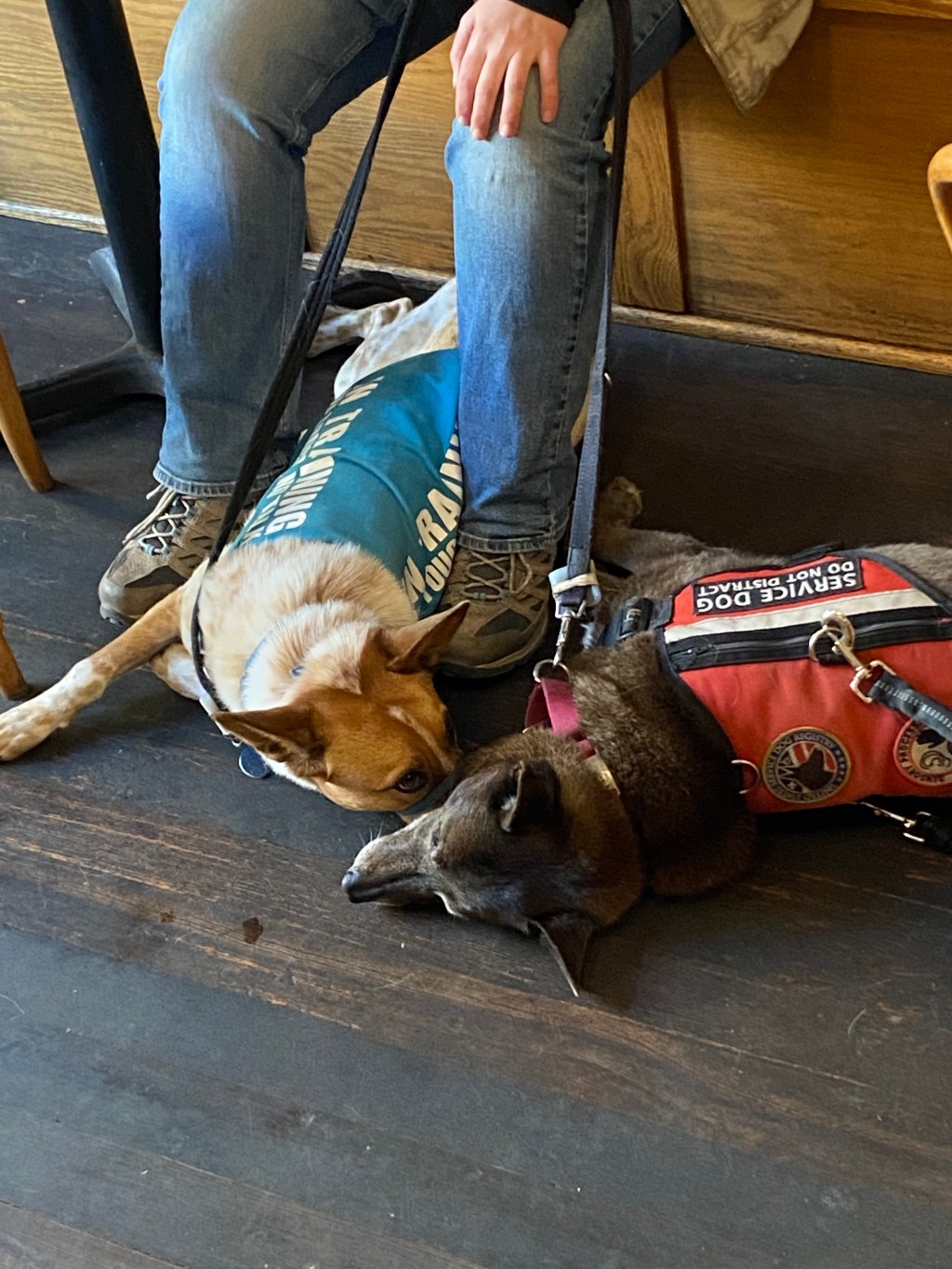
Now at 13 years old, Billie is retired and helping to train her little sister to take over her duties. Since receiving my two primary diagnoses and becoming a service dog handler, I’ve gained a much deeper appreciation for these hard-working companions and the jobs they do. I’ve met fellow service dog handlers and shared experiences with them, both positive and negative. I’ll do my best to keep these next few posts as professional as possible. Though I am autistic, and this is a “special interest” of mine. So I may get a little carried away from time to time.
References
Health Essentials (2024). Asperger’s vs Autism: What’s the Difference?. https://health.clevelandclinic.org/aspergers-vs-autism
Thompson, J. (2018). How to Apply for a California Assistance Dog Tag. Legal Beagle. https://legalbeagle.com/5313646-apply-california-assistance-dog-tag.html
 Unicorn Roots
Questions, comments, suggestions? Drop them here.