Part 2: Job Titles
Dogs have been working with people for a very long time, far longer than they’ve been our pets, and with good reason. They can sense things that we just can’t. In fact, dogs have around 300 million olfactory receptors in their noses, compared to humans, who have around six million. And that’s just their nose! The first known guide dogs were working with people in the first century AD, and standardized guide dog training began in the 18th century (Mueller, 2025). However, this is just one job that a service dog can do.
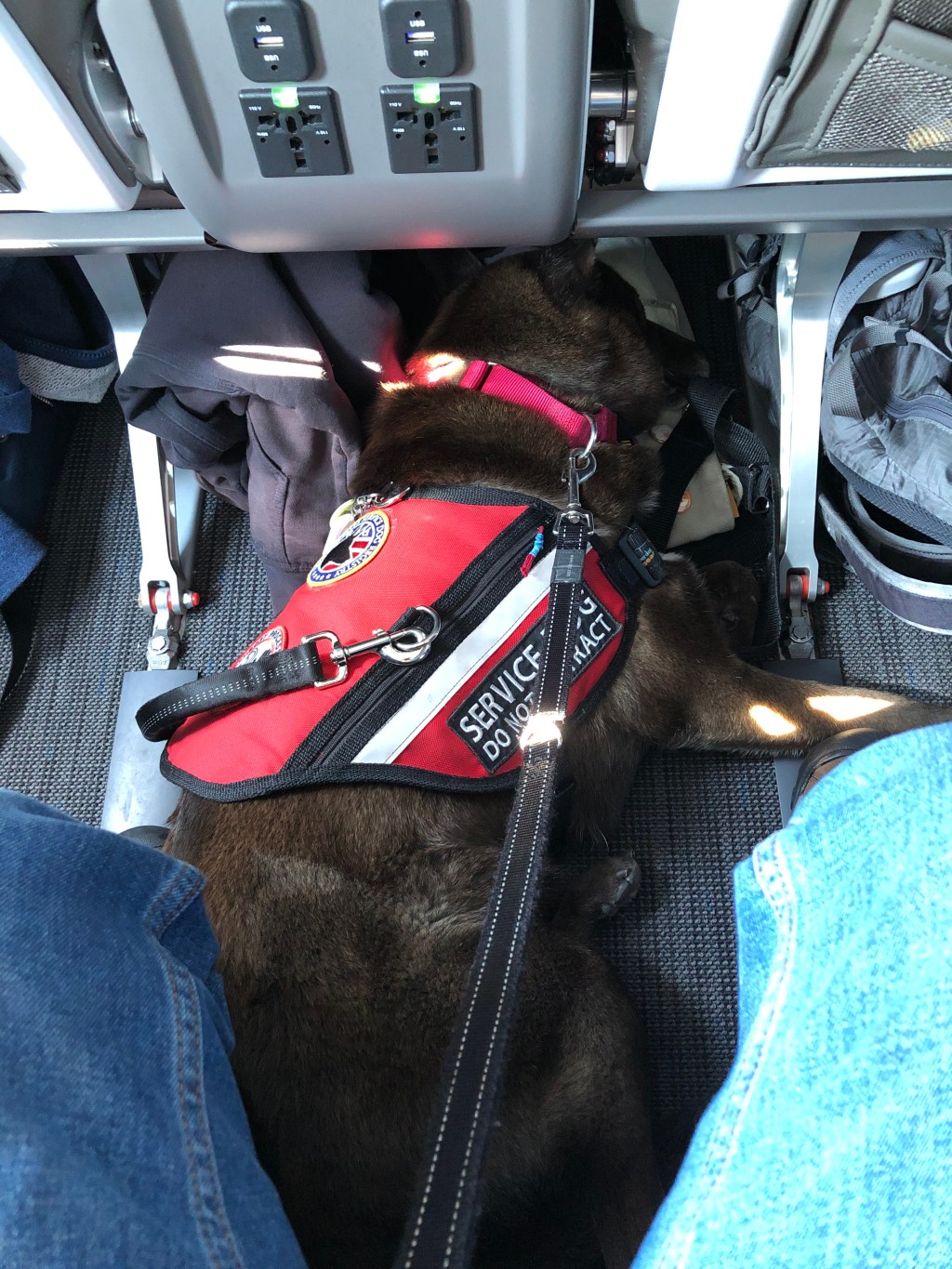
A service animal may be a miniature horse in some special situations, but these situations are very rare. For this reason, this article will focus on service dogs. Regardless of terminology, service dogs are specially trained to help with tasks that their handlers struggle to perform independently. For example, mobility service dogs may press access buttons or brace an unsteady handler. Guide dogs identify and maneuver around obstacles using a specialized harness. Hearing dogs alert their deaf handlers to specific sounds and lead them to safety when necessary. Medical alert dogs detect significant hormonal changes or the presence of dangerous allergens. Some alert dogs are even trained to get help when necessary (US Service Animals, 2023).
The Americans with Disabilities Act (ADA) defines a service dog as “any guide dog, signal dog, or other dog that has been trained to provide assistance to an individual with a disability” (Stull, 2025a). Unfortunately, service dogs are often confused with therapy dogs and emotional support animals (ESAs). While these types of assistance dogs definitely play important roles, they have distinctly different job descriptions. It’s often easier to distinguish service dogs from therapy dogs and ESAs when you understand the variety of jobs that service dogs can do. These jobs can include guiding, hearing, mobility tasks, medical alert, psychiatric, or a combination of these.
In the US alone, there are more than 500,000 working service dogs. All of these service dogs are legally allowed to enter any public space, even where pets are not allowed. While guide dogs are the most widely known type of service dog, even their jobs are not as simple as some may think. They do more than just take their blind or visually impaired handlers from point A to point B. These amazing dogs stop at curbs to alert their handler to a crossing, avoid obstacles that could harm their handler, and actively ignore potentially dangerous commands (a technique called “selective disobedience”). They are generally trained for around a year to a year and a half, beginning with puppy raisers who work on basic obedience training and socialization. After this, the dogs move on to be trained by professional guide dog trainers before they’re paired with their handler. Finally, the dog and their new handler work together in a 2-4 week training program (Mueller, 2025; Stull, 2025a).
Similarly, hearing ear dogs are raised like guide dogs. However, these dogs are trained to alert their deaf and hard-of-hearing handlers to specific sounds (e.g., oncoming cars, alarms, door bells, and knocking) and lead them to or away when necessary. Once paired with their new handler, they work on a 2-4 week training program that may also include additional, specialized alert skills (Stull, 2025a; Mueller, 2025).
Mobility assistance is another important type of service dog job. These dogs can help pull a wheelchair over uneven or challenging terrain, or help handlers with less well-known mobility disabilities like arthritis, Cerebral Palsy, muscular dystrophy, spinal cord injuries, and more. Their tasks can also include retrieving items that their handler drops, helping to open and close doors, pushing access buttons, and providing physical support to a handler with difficulty balancing, using stairs, and/or moving between sitting and standing (Stull, 2025a; Mueller, 2025).
Seizure response dogs are a type of medical assistance dog trained to remain with their handler during a seizure and to alert or retrieve help if needed. In contrast, seizure alert dogs are trained to alert their handler to chemical changes that precede a seizure, allowing their handler get to a safe place before the seizure occurs. While there’s no conclusive proof as to how seizure alert dogs do it, there is significant evidence supporting their effectiveness (Stull, 2025a; Mueller, 2025).
Other alert dogs, such as allergy detection and diabetic alert dogs, are also trained to alert their handlers to the presence of allergens or to changes in insulin levels that could be fatal if not handled appropriately. However, contrary to popular belief, alert dogs cannot be trained to recognize the scent they alert to. These dogs are chosen and trained for their jobs because of their innate ability to detect these scents (Stull, 2025a).
Psychiatric service dogs are actually a category of medical assistance dogs trained to help their handlers with mental health conditions such as PTSD, OCD, severe social anxiety, self-harm, autism spectrum disorder (ASD), and more. These dogs can be trained to walk ahead of their handler, turn lights on in a new room, interrupt an anxiety or panic attack, create a physical barrier to distance known triggers, or even alert their handler in a way that creates an excuse to leave. Autism support dogs, one type of psychiatric service dog, also help their handlers (often children) navigate difficult social settings, prevent eloping, mediate the symptoms of sensory overload, and provide companionship when others can’t. However, one common misconception is that psychiatric service dogs and ESAs are the same. The major difference here is that emotional support isn’t a disability task. In fact, ESAs don’t need any specialized training (Stull, 2025a; Mueller, 2025; US Service Animals, 2023).
Clearly, service dogs can do a lot. This is exactly why it’s so important to differentiate between the different categories of assistance animals. While there is no clear definition of “assistance animal,” a common consensus seems to define this term as an umbrella term including all service animals, therapy animals, and emotional support animals. So, it’s important to clearly differentiate between the other two categories as well.
According to the ADA, an ESA (also called an emotional support dog or ESD) is “an animal [which] provides companionship, relieves loneliness, and sometimes helps with depression, anxiety, or certain phobias, but do not have special training to perform tasks that assist people with disabilities.” ESAs are pets and are not permitted into places that don’t already allow pets without a letter from a medical or mental health provider. However, it’s also important to remember that no matter the certification or qualification, an aggressive dog can be denied entry or asked to leave any establishment. That said, service dogs are the only type of assistance animal with full access to public areas (Stull, 2025b).
Therapy dogs (and sometimes other animals) are pets whose handler brings them somewhere to offer therapeutic care to others. These dogs have to be certified nationally, locally, or occasionally through the facilities providing animal therapy. There are three main types of therapy dogs: therapeutic visitation dogs, animal-assisted therapy dogs, and facility therapy dogs. Therapeutic visitation dogs are part of a team visiting hospitals, retirement facilities, and similar facilities in order to lift spirits and/or distract the patients receiving treatment. Animal-assisted therapy dogs work with health professionals in facilities like rehabilitation centers to help with injury recovery or heightened anxiety levels, allowing patients to relax and open up more. Facility therapy dogs typically live where they work with the residents, in places like nursing homes. They can be trained to comfort residents, alert staff when needed, and perform other related tasks (Stull, 2025b).
All in all, dogs are amazing. Service dogs, ESAs, and therapy dogs do amazing jobs that are as varied as the disabilities and conditions that they help their humans with. However, it’s important to remember to respect these assistance dog teams. Wanting to bring your dog everywhere isn’t a reason to pretend that they’re a service dog. And most importantly, ask before you pet that adorable puppy; they may be working.
References
Mueller, L. (2025). 8 Types of Service Dogs and What They Do. Title of source. https://www.thesprucepets.com/types-of-service-dogs-4587180
Stull, E. (2025a). The 10 Most Common Types of Service Dogs. The Academy of Pet Careers. https://www.theacademyofpetcareers.com/blog/10-types-of-service-dogs/
Stull, E. (2025b). Therapy Dogs vs Emotional Support Dogs: What is the difference?. The Academy of Pet Careers. https://www.theacademyofpetcareers.com/blog/therapy-dogs-vs-emotional-support-dogs/
US Service Animals (2023). The Different Types of Service Animals & How They Can Help. US Service Animals. https://usserviceanimals.org/blog/types-of-service-animals/
 Unicorn Roots
Questions, comments, suggestions? Drop them here.