Part 3: Legallities
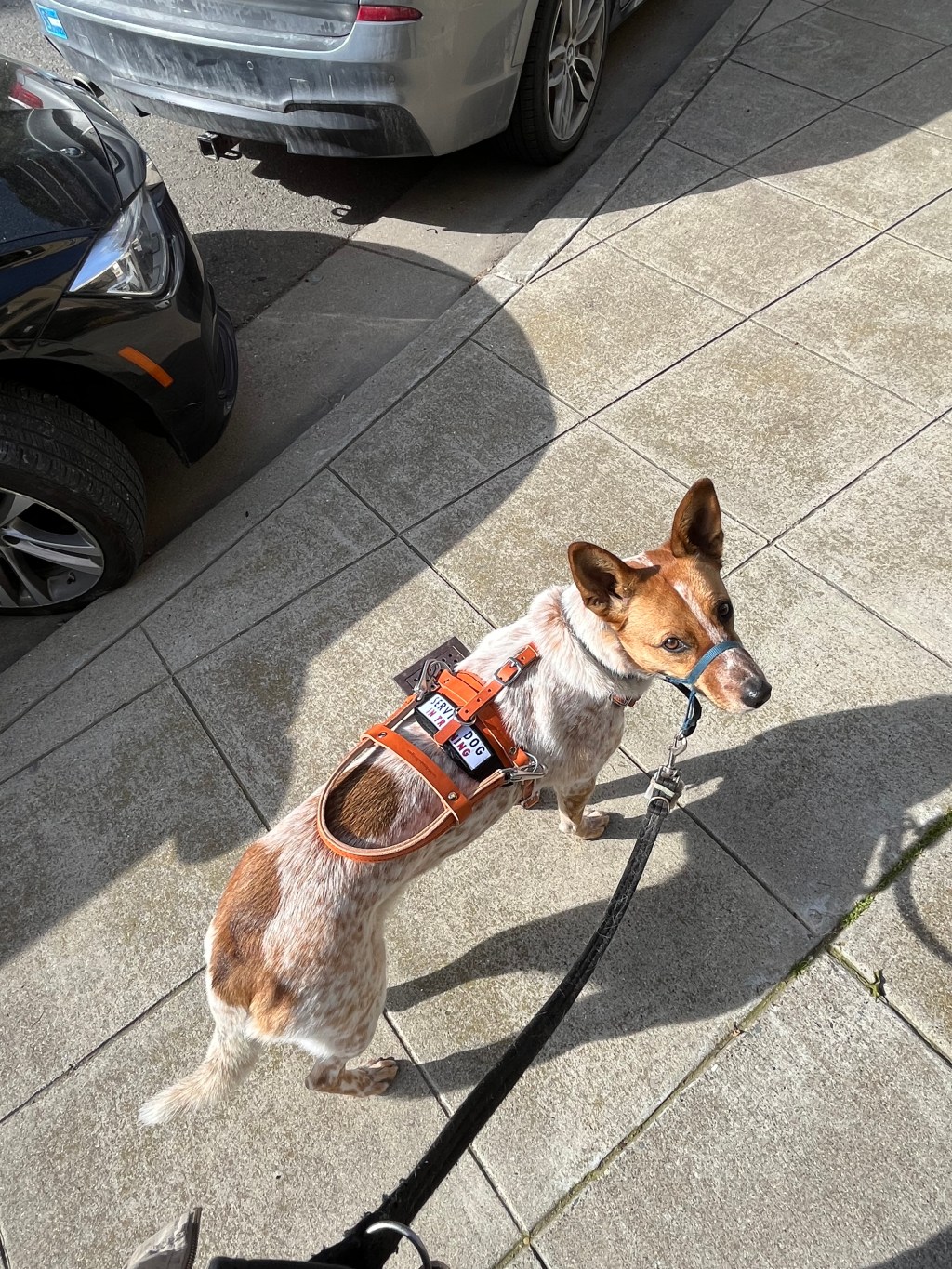
In “Service Animals, Part 2,” I explained what a service animal was. Of course, legal definitions and legalities in general are often more complex than they appear. Generally, any establishment open to the public must allow service dogs to accompany their handlers, even where there’s a no pets policy. In the US, service dogs are not required to be certified or trained by a professional, nor are they required to wear a harness, vest, or tag to identify them as a service dog (US Department of Justice, n.d.).
I also mentioned briefly in “Service Animals, Part 2,” that a service animal is generally a dog. However, miniature horses — typically up to three feet tall and weighing up to 100 pounds — may also qualify where reasonable. If the horse is house-broken, under the handler’s control, and the facility can accommodate the horse’s general type and size without compromising legitimate safety requirements, it is considered a reasonable service animal (US Department of Justice, 2020). For time and clarity, though, I’ll continue to focus on service dogs.
Legally speaking, a service dog is one specifically trained to help their disabled handler with tasks directly related to their disability. While service dogs may also provide comfort and emotional support, these skills are not considered service dog tasks. Other working dogs, such as facility dogs, therapy dogs, and Emotional Support Animals (ESAs), provide comfort and emotional support primarily to non-disabled individuals. Though these dogs are often highly trained, they are still considered pets. For example, facility dogs are trained to assist professionals working in healthcare, rehabilitation centers, criminal justice settings, and similar establishments. Therapy dogs are certified to visit and comfort certain therapy patients. ESAs, while not specially trained, help to comfort and calm their handlers. However, these working dogs are only allowed where pets are and where their specific jobs take them (Canine Companions, 2026).
To identify service dogs, establishments may ask a handler whether their dog is required due to their disability and what specific tasks the dog has been trained to perform. However, regardless of the handler’s response to this, they can not ask for proof of this disability or of the service dog’s qualifications. If the dog can not be kept under reasonable control, or if the service dog’s presence will fundamentally alter the nature of goods, services, programs, or activities provided, those in charge are allowed to refuse entry or service, or ask the handler to remove their service dog. For example, a sterile hospital setting may require the removal of a service dog. If a service dog must be removed, the handler must be provided with an alternative opportunity to receive their goods or services without their service dog (US Department of Justice, n.d.; US Department of Justice, 2020).
Legally speaking, service animals are not pets, as their tasks directly relate to their handlers’ disabilities. For this reason, service dog handlers are not required to answer questions about their disability, documentation, proof of necessary accommodations, or to demonstrate their service dog’s training. They can’t be segregated, given lower-quality service, or charged more solely because of their service dog. A business can charge handlers for damages that they or their service dog cause, if other non-disabled customers would also be charged for damages. However, if a service dog handler needs alternative accommodations, the business is not responsible for the service dog’s care or supervision (US Department of Justice, 2020).
To add to this, a customer or employee’s allergies and/or fear of dogs is not considered a valid reason to deny a service dog handler access to goods and services. These fears and allergies will not fundamentally alter the nature of goods or services provided. This means that if someone is allergic to pet dander, the business must accommodate both the disabled handler and the allergic customer separately (US Department of Justice, 2020).
It’s important to note here that rules and regulations are often updated as needs evolve. For instance, the most recent update of the Americans with Disabilities Act (ADA) Title II and Title III regulations, published by the US Department of Justice (DOJ) in September 2010, modified specific requirements for the regulation of public and commercial accommodations, including the 2010 Standards for Accessible Design (2010 Standards). That said, state and local laws may differ from federal regulations. So it’s important to check your state attorney general’s office for all applicable laws (US Department of Justice, 2020).
Regardless of these local and federal variations, all housing, schools, emergency shelters, and businesses must comply with ADA regulations. State and local governments may also require licensing and vaccination for service dogs, but only if these conditions apply to all dogs. They can not require specific service dog certifications or registrations, or discriminate against service dogs based on breed. Notably, airplanes are not subject to ADA’s regulations. Instead, they are required to comply with the Air Carrier Access Act. Similarly, the Equal Employment Opportunity Commission (EEOC) is responsible for enforcing ADA regulations in employment settings (US Department of Justice, n.d.). Simply put, if your well-behaved service dog helps you manage your disability, you can take them with you.
References
Canine Companions (2026). Know the Differences: Service Dogs, Emotional Support Animals, and More. Canine Companions. https://canine.org/service-dogs/service-dog-month/service-dog-differences/
US Department of Justice (n.d.). Service Animals. ADA.gov. https://www.ada.gov/topics/service-animals/
US Department of Justice (2020). ADA Requirements: Service Animals. ADA.gov. https://www.ada.gov/resources/service-animals-2010-requirements/#miniature-horses
 Unicorn Roots
Questions, comments, suggestions? Drop them here.