• Service Animals, Part 3

    Part 3: Legallities

    In “Service Animals, Part 2,” I explained what a service animal was. Of course, legal definitions and legalities in general are often more complex than they appear. Generally, any establishment open to the public must allow service dogs to accompany their handlers, even where there’s a no pets policy. In the US, service dogs are not required to be certified or trained by a professional, nor are they required to wear a harness, vest, or tag to identify them as a service dog (US Department of Justice, n.d.).

    I also mentioned briefly in “Service Animals, Part 2,” that a service animal is generally a dog. However, miniature horses — typically up to three feet tall and weighing up to 100 pounds — may also qualify where reasonable. If the horse is house-broken, under the handler’s control, and the facility can accommodate the horse’s general type and size without compromising legitimate safety requirements, it is considered a reasonable service animal (US Department of Justice, 2020). For time and clarity, though, I’ll continue to focus on service dogs.

    Legally speaking, a service dog is one specifically trained to help their disabled handler with tasks directly related to their disability. While service dogs may also provide comfort and emotional support, these skills are not considered service dog tasks. Other working dogs, such as facility dogs, therapy dogs, and Emotional Support Animals (ESAs), provide comfort and emotional support primarily to non-disabled individuals. Though these dogs are often highly trained, they are still considered pets. For example, facility dogs are trained to assist professionals working in healthcare, rehabilitation centers, criminal justice settings, and similar establishments. Therapy dogs are certified to visit and comfort certain therapy patients. ESAs, while not specially trained, help to comfort and calm their handlers. However, these working dogs are only allowed where pets are and where their specific jobs take them (Canine Companions, 2026).

    To identify service dogs, establishments may ask a handler whether their dog is required due to their disability and what specific tasks the dog has been trained to perform. However, regardless of the handler’s response to this, they can not ask for proof of this disability or of the service dog’s qualifications. If the dog can not be kept under reasonable control, or if the service dog’s presence will fundamentally alter the nature of goods, services, programs, or activities provided, those in charge are allowed to refuse entry or service, or ask the handler to remove their service dog. For example, a sterile hospital setting may require the removal of a service dog. If a service dog must be removed, the handler must be provided with an alternative opportunity to receive their goods or services without their service dog (US Department of Justice, n.d.; US Department of Justice, 2020).

    Legally speaking, service animals are not pets, as their tasks directly relate to their handlers’ disabilities. For this reason, service dog handlers are not required to answer questions about their disability, documentation, proof of necessary accommodations, or to demonstrate their service dog’s training. They can’t be segregated, given lower-quality service, or charged more solely because of their service dog. A business can charge handlers for damages that they or their service dog cause, if other non-disabled customers would also be charged for damages. However, if a service dog handler needs alternative accommodations, the business is not responsible for the service dog’s care or supervision (US Department of Justice, 2020).

    To add to this, a customer or employee’s allergies and/or fear of dogs is not considered a valid reason to deny a service dog handler access to goods and services. These fears and allergies will not fundamentally alter the nature of goods or services provided. This means that if someone is allergic to pet dander, the business must accommodate both the disabled handler and the allergic customer separately (US Department of Justice, 2020).

    It’s important to note here that rules and regulations are often updated as needs evolve. For instance, the most recent update of the Americans with Disabilities Act (ADA) Title II and Title III regulations, published by the US Department of Justice (DOJ) in September 2010, modified specific requirements for the regulation of public and commercial accommodations, including the 2010 Standards for Accessible Design (2010 Standards). That said, state and local laws may differ from federal regulations. So it’s important to check your state attorney general’s office for all applicable laws (US Department of Justice, 2020).

    Regardless of these local and federal variations, all housing, schools, emergency shelters, and businesses must comply with ADA regulations. State and local governments may also require licensing and vaccination for service dogs, but only if these conditions apply to all dogs. They can not require specific service dog certifications or registrations, or discriminate against service dogs based on breed. Notably, airplanes are not subject to ADA’s regulations. Instead, they are required to comply with the Air Carrier Access Act. Similarly, the Equal Employment Opportunity Commission (EEOC) is responsible for enforcing ADA regulations in employment settings (US Department of Justice, n.d.). Simply put, if your well-behaved service dog helps you manage your disability, you can take them with you.

    References

    Canine Companions (2026). Know the Differences: Service Dogs, Emotional Support Animals, and More. Canine Companions. https://canine.org/service-dogs/service-dog-month/service-dog-differences/

    US Department of Justice (n.d.). Service Animals. ADA.gov. https://www.ada.gov/topics/service-animals/

    US Department of Justice (2020). ADA Requirements: Service Animals. ADA.gov. https://www.ada.gov/resources/service-animals-2010-requirements/#miniature-horses
  • Service Animals, Part 2

    Part 2: Job Titles

    Dogs have been working with people for a very long time, far longer than they’ve been our pets, and with good reason. They can sense things that we just can’t. In fact, dogs have around 300 million olfactory receptors in their noses, compared to humans, who have around six million. And that’s just their nose! The first known guide dogs were working with people in the first century AD, and standardized guide dog training began in the 18th century (Mueller, 2025). However, this is just one job that a service dog can do.

    A service animal may be a miniature horse in some special situations, but these situations are very rare. For this reason, this article will focus on service dogs. Regardless of terminology, service dogs are specially trained to help with tasks that their handlers struggle to perform independently. For example, mobility service dogs may press access buttons or brace an unsteady handler. Guide dogs identify and maneuver around obstacles using a specialized harness. Hearing dogs alert their deaf handlers to specific sounds and lead them to safety when necessary. Medical alert dogs detect significant hormonal changes or the presence of dangerous allergens. Some alert dogs are even trained to get help when necessary (US Service Animals, 2023).

    The Americans with Disabilities Act (ADA) defines a service dog as “any guide dog, signal dog, or other dog that has been trained to provide assistance to an individual with a disability” (Stull, 2025a). Unfortunately, service dogs are often confused with therapy dogs and emotional support animals (ESAs). While these types of assistance dogs definitely play important roles, they have distinctly different job descriptions. It’s often easier to distinguish service dogs from therapy dogs and ESAs when you understand the variety of jobs that service dogs can do. These jobs can include guiding, hearing, mobility tasks, medical alert, psychiatric, or a combination of these.

    In the US alone, there are more than 500,000 working service dogs. All of these service dogs are legally allowed to enter any public space, even where pets are not allowed. While guide dogs are the most widely known type of service dog, even their jobs are not as simple as some may think. They do more than just take their blind or visually impaired handlers from point A to point B. These amazing dogs stop at curbs to alert their handler to a crossing, avoid obstacles that could harm their handler, and actively ignore potentially dangerous commands (a technique called “selective disobedience”). They are generally trained for around a year to a year and a half, beginning with puppy raisers who work on basic obedience training and socialization. After this, the dogs move on to be trained by professional guide dog trainers before they’re paired with their handler. Finally, the dog and their new handler work together in a 2-4 week training program (Mueller, 2025; Stull, 2025a).

    Similarly, hearing ear dogs are raised like guide dogs. However, these dogs are trained to alert their deaf and hard-of-hearing handlers to specific sounds (e.g., oncoming cars, alarms, door bells, and knocking) and lead them to or away when necessary. Once paired with their new handler, they work on a 2-4 week training program that may also include additional, specialized alert skills (Stull, 2025a; Mueller, 2025).

    Mobility assistance is another important type of service dog job. These dogs can help pull a wheelchair over uneven or challenging terrain, or help handlers with less well-known mobility disabilities like arthritis, Cerebral Palsy, muscular dystrophy, spinal cord injuries, and more. Their tasks can also include retrieving items that their handler drops, helping to open and close doors, pushing access buttons, and providing physical support to a handler with difficulty balancing, using stairs, and/or moving between sitting and standing (Stull, 2025a; Mueller, 2025).

    Seizure response dogs are a type of medical assistance dog trained to remain with their handler during a seizure and to alert or retrieve help if needed. In contrast, seizure alert dogs are trained to alert their handler to chemical changes that precede a seizure, allowing their handler get to a safe place before the seizure occurs. While there’s no conclusive proof as to how seizure alert dogs do it, there is significant evidence supporting their effectiveness (Stull, 2025a; Mueller, 2025).

    Other alert dogs, such as allergy detection and diabetic alert dogs, are also trained to alert their handlers to the presence of allergens or to changes in insulin levels that could be fatal if not handled appropriately. However, contrary to popular belief, alert dogs cannot be trained to recognize the scent they alert to. These dogs are chosen and trained for their jobs because of their innate ability to detect these scents (Stull, 2025a).

    Psychiatric service dogs are actually a category of medical assistance dogs trained to help their handlers with mental health conditions such as PTSD, OCD, severe social anxiety, self-harm, autism spectrum disorder (ASD), and more. These dogs can be trained to walk ahead of their handler, turn lights on in a new room, interrupt an anxiety or panic attack, create a physical barrier to distance known triggers, or even alert their handler in a way that creates an excuse to leave. Autism support dogs, one type of psychiatric service dog, also help their handlers (often children) navigate difficult social settings, prevent eloping, mediate the symptoms of sensory overload, and provide companionship when others can’t. However, one common misconception is that psychiatric service dogs and ESAs are the same. The major difference here is that emotional support isn’t a disability task. In fact, ESAs don’t need any specialized training (Stull, 2025a; Mueller, 2025; US Service Animals, 2023).

    Clearly, service dogs can do a lot. This is exactly why it’s so important to differentiate between the different categories of assistance animals. While there is no clear definition of “assistance animal,” a common consensus seems to define this term as an umbrella term including all service animals, therapy animals, and emotional support animals. So, it’s important to clearly differentiate between the other two categories as well.

    According to the ADA, an ESA (also called an emotional support dog or ESD) is “an animal [which] provides companionship, relieves loneliness, and sometimes helps with depression, anxiety, or certain phobias, but do not have special training to perform tasks that assist people with disabilities.” ESAs are pets and are not permitted into places that don’t already allow pets without a letter from a medical or mental health provider. However, it’s also important to remember that no matter the certification or qualification, an aggressive dog can be denied entry or asked to leave any establishment. That said, service dogs are the only type of assistance animal with full access to public areas (Stull, 2025b).

    Therapy dogs (and sometimes other animals) are pets whose handler brings them somewhere to offer therapeutic care to others. These dogs have to be certified nationally, locally, or occasionally through the facilities providing animal therapy. There are three main types of therapy dogs: therapeutic visitation dogs, animal-assisted therapy dogs, and facility therapy dogs. Therapeutic visitation dogs are part of a team visiting hospitals, retirement facilities, and similar facilities in order to lift spirits and/or distract the patients receiving treatment. Animal-assisted therapy dogs work with health professionals in facilities like rehabilitation centers to help with injury recovery or heightened anxiety levels, allowing patients to relax and open up more. Facility therapy dogs typically live where they work with the residents, in places like nursing homes. They can be trained to comfort residents, alert staff when needed, and perform other related tasks (Stull, 2025b).

    All in all, dogs are amazing. Service dogs, ESAs, and therapy dogs do amazing jobs that are as varied as the disabilities and conditions that they help their humans with. However, it’s important to remember to respect these assistance dog teams. Wanting to bring your dog everywhere isn’t a reason to pretend that they’re a service dog. And most importantly, ask before you pet that adorable puppy; they may be working.

    References

    Mueller, L. (2025). 8 Types of Service Dogs and What They Do. Title of source. https://www.thesprucepets.com/types-of-service-dogs-4587180

    Stull, E. (2025a). The 10 Most Common Types of Service Dogs. The Academy of Pet Careers. https://www.theacademyofpetcareers.com/blog/10-types-of-service-dogs/

    Stull, E. (2025b). Therapy Dogs vs Emotional Support Dogs: What is the difference?. The Academy of Pet Careers. https://www.theacademyofpetcareers.com/blog/therapy-dogs-vs-emotional-support-dogs/

    US Service Animals (2023). The Different Types of Service Animals & How They Can Help. US Service Animals. https://usserviceanimals.org/blog/types-of-service-animals/

  • Service Animals, Part 1

    First Hand Experience

    Service dogs are incredible companions capable of handling a wide variety of jobs. If you’ve spent time on social media or watched the news, you’ve likely heard stories about the great work that these dogs can do. While most people are pretty familiar with guide dogs, service dogs’ abilities extend far beyond this. 

    As a handler currently working with my third service dog, I can confidently say that their help is wholly transformative. My first service dog lacked formal training and would be considered an assistance dog or an emotional support animal (ESA) today. However, 20 years ago, federal laws and California state regulations regarding these classifications were far more vague than they are today.

    When I adopted Xander in 2005, I was struggling with severe anxiety and found it very challenging to navigate busy or crowded places. I had heard that all I needed to do to bring my 21-pound Shiba Inu mix with me was to register him as a California Assistance Dog, specifying, when asked, that he was my psychiatric service dog (Thompson, 2018). This was almost a decade before I received my formal diagnoses, and I was determined to appear “normal”. Despite the effort, my anxiety made masking my insecurities nearly impossible without Xander’s help.

    After Xander passed away from congestive heart failure in 2014, I felt the detachment and anxiety returning in a very visceral way. I’d just learned about Asperger’s Syndrome (ASD level 1 or ASD-1), and I was beginning to see the connections in my own life (Health Essentials, 2024). I knew that I would need to find a fully qualified service dog to pick up the other end of the leash. Thankfully, with the help of my family and a few local connections, I adopted and trained Billie. I then went through the grueling process of obtaining formal diagnoses for both ASD and epilepsy. I could now proudly adjust to life with new insight and a furry sidekick to keep me safe.

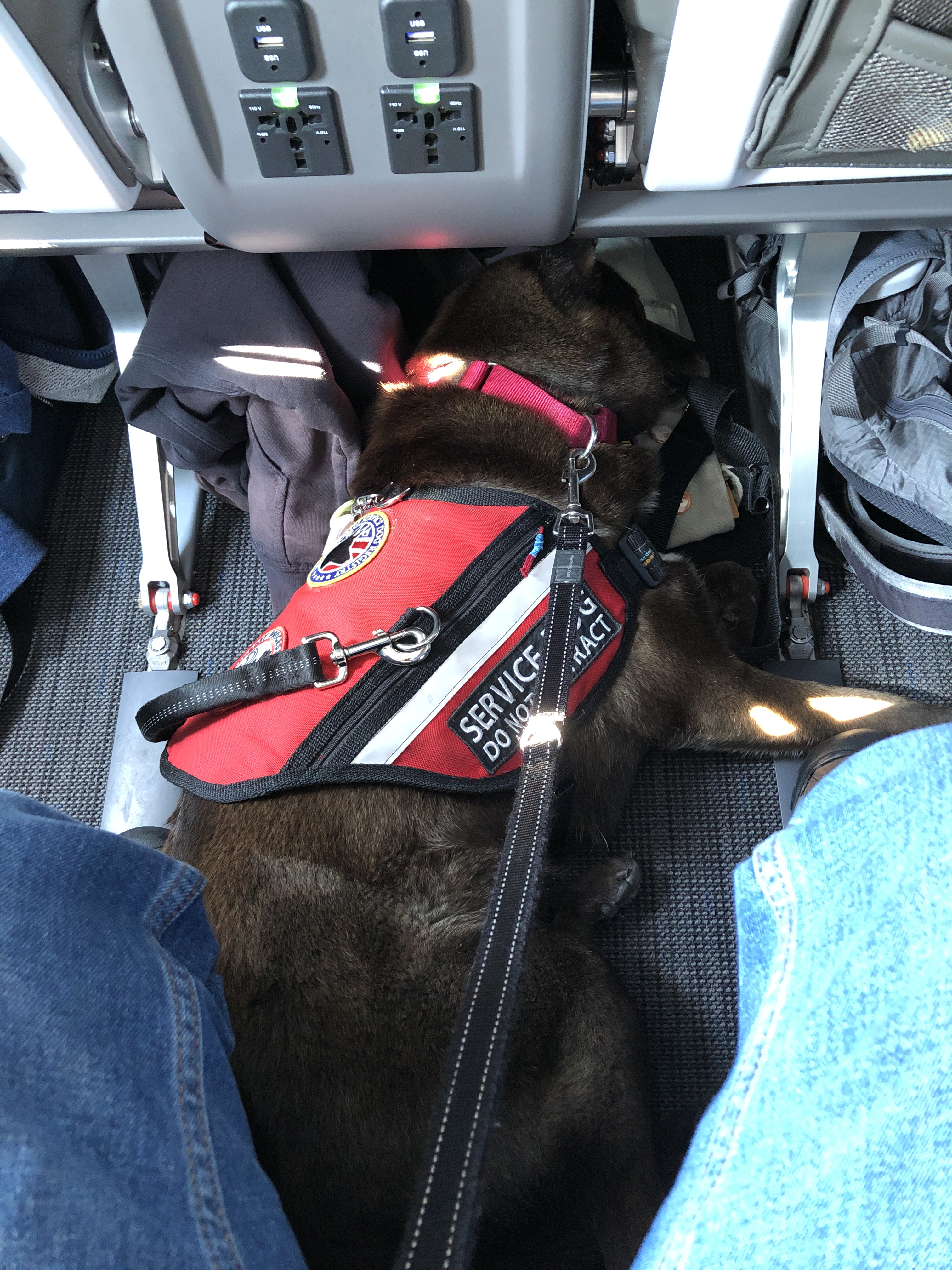
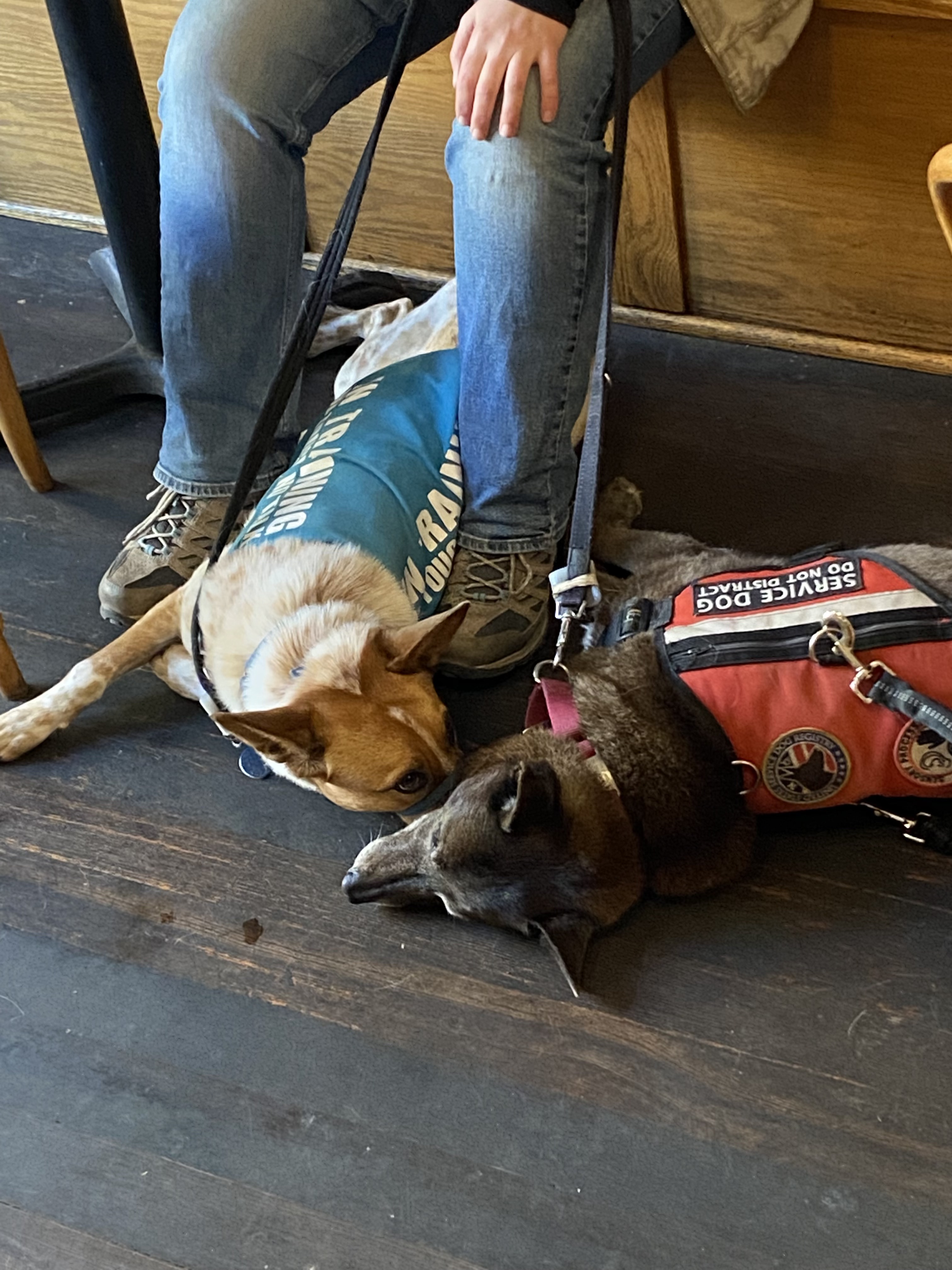
    Now at 13 years old, Billie is retired and helping to train her little sister to take over her duties. Since receiving my two primary diagnoses and becoming a service dog handler, I’ve gained a much deeper appreciation for these hard-working companions and the jobs they do. I’ve met fellow service dog handlers and shared experiences with them, both positive and negative. I’ll do my best to keep these next few posts as professional as possible. Though I am autistic, and this is a “special interest” of mine. So I may get a little carried away from time to time.

    References

    Health Essentials (2024). Asperger’s vs Autism: What’s the Difference?. https://health.clevelandclinic.org/aspergers-vs-autism

    Thompson, J. (2018). How to Apply for a California Assistance Dog Tag. Legal Beagle. https://legalbeagle.com/5313646-apply-california-assistance-dog-tag.html