• Silver Linings — Assistive Technology

    FocusMate

    FocusMate is a virtual body doubling service, but let me back up. Body doubling is essentially parallel play for everyday tasks and chores. Many neurodiverse people, especially those with ADHD, have a hard time staying focused when alone, but work far more efficiently when someone else is there holding them accountable. Like most people, I sought this out for most of my life and only recently learned the name for it.

    Kids doing homework while a parent works on something nearby and periodically checks; that’s body doubling. Working on your laptop at a library or café while others do the same; also, body doubling. In behavioral health, this is often described as modeled behavior. FocusMate applies this same concept through video calls and builds the Pomodoro Technique into its structure: a method traditionally using cycles of 25-minute bursts of focused work with 5-minute breaks in between, designed to boost productivity and prevent burnout.

    FocusMate’s pricing is also straightforward and reasonable. Their free plan allows users up to three sessions a week at no charge. Their Plus plan offers unlimited weekly sessions for $8 per month (billed annually) or $12 per month (billed monthly). Businesses can also sign up for $5 per user per month for teams of 10 or more, with a $50 monthly minimum.

    The site itself has a detailed, fully cited article on the science behind their method, along with an FAQ page and a page with detailed guidance on what users can do during sessions. Sessions can be prescheduled or started within minutes of logging in. To start a session, a user selects a length of time (25, 50, or 75 minutes), a task mode (Desk, Moving, or Anything), and whether they’d like to work in Quiet Mode. I personally prefer 50-minute sessions on the Anything task mode without setting Quiet Mode. I then introduce myself and my task, mute my microphone, and start working.

    My preferred settings let me stay focused on my task and listen to my Instrumental Study playlist with someone else helping to hold me accountable. What a difference! When I first heard about FocusMate, I assumed it was just another app for sensitive tech bros. But it has genuinely helped me improve my productivity, and I’m happy to be proven wrong by science.

    References

    Focusmate Inc. (2026). How It Works. FocusMate.com. https://www.focusmate.com/how-it-works/

    Health Essentials (2025). What is Body Doubling and Can It Help with ADHD?. Cleveland Clinic. https://health.clevelandclinic.org/body-doubling-for-adhd
  • Silver Linings — Stress & Anxiety Aids

    The Woobles

    A few years ago, a therapist I was seeing suggested that I try to take up an offline hobby. Research has backed this up. Hobbies can help with the symptoms of stress, depression, and anxiety in several ways. Some can help us process emotions and ground us in the present. Others can create a sense of progress through small wins, which can help us strengthen our identities and build connections. They can also help us with routines and healthy habits. In fact, 45 minutes of working on visual art can reduce cortisol levels in 75% of people. Journaling can bring clarity in tough situations, and gardening can help ease depression (MHA, 2026).

    There were plenty of hobby options to choose from. I could even take up people-watching in the park, using snippets of overheard conversations as creative writing prompts. But fiber arts were starting their comeback, and I knew that my mom and sister both knew how to knit and crochet. Naturally, I wanted to learn too, but I didn’t want to take up their time. YouTube had some decent videos, but most were aimed at experienced crocheters.

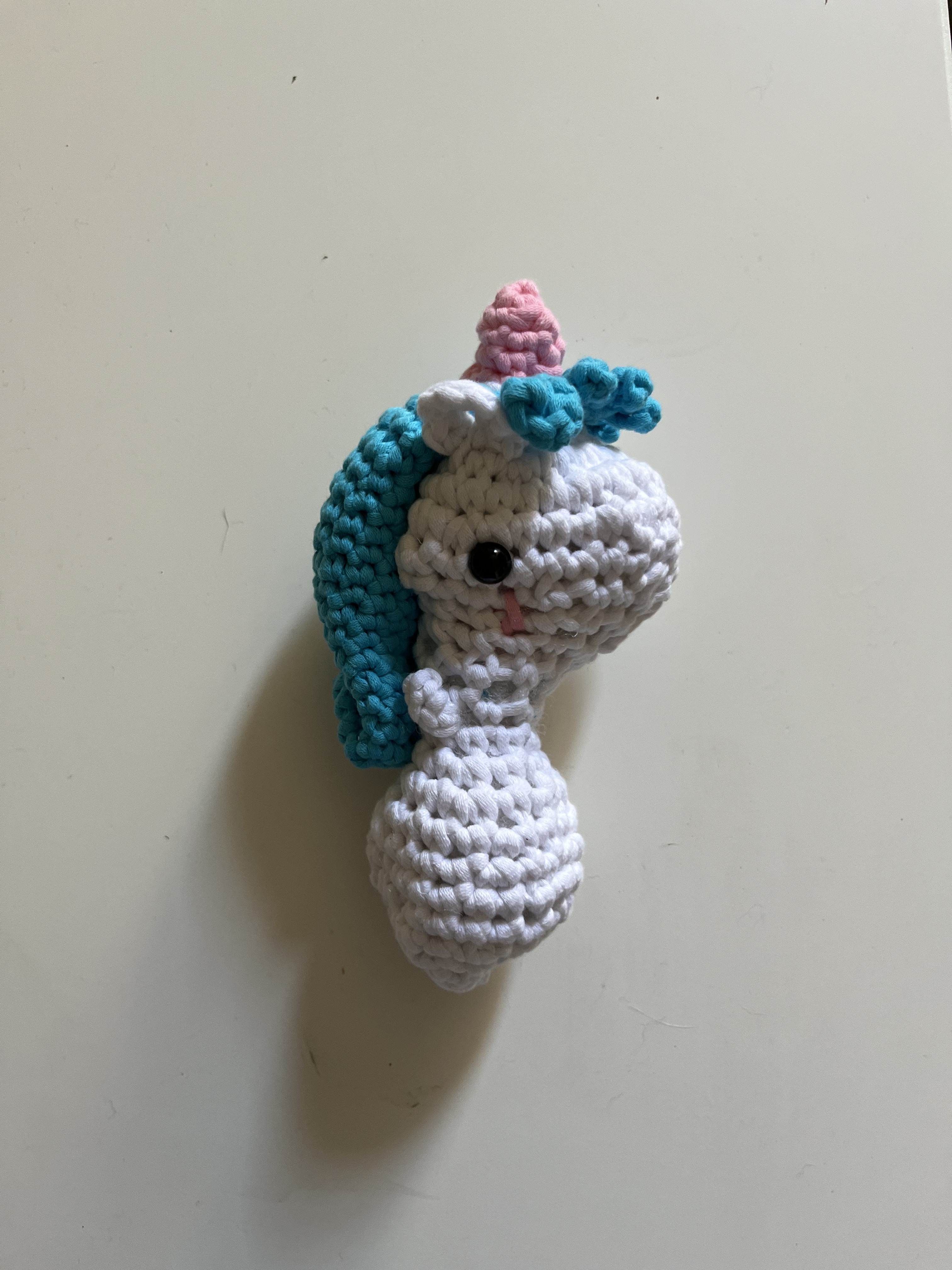
    Then I saw an ad for The Woobles. That was it! Something felt perfectly suited to a detail-oriented, routine-obsessed mind like mine. I found the kit I wanted and got started. I started with the easy Woobles originals and quickly filled my wish list with favorites. They now offer a wide and growing range of options, including their original patterns. If you’re looking for something nerdy or fantastical, there are now crochet collaborations with franchises ranging from Peanuts and Hello Kitty to The Lord of the Rings and Harry Potter. Every kit comes with all the materials you’ll need, including a QR code for the video instructions, and the company’s YouTube channel has other helpful content (The Woobles, 2026). I can’t recommend The Woobles enough!

    References

    The Woobles (2026). Billy the Unicorn Crochet Kit. The Woobles. https://thewoobles.com/products/unicorn-crochet-kit?_pos=2&_psq=billy&_ss=e&_v=1.0

    MHA (2026). Why Hobbies Are Good for Your Mental Health. Mental Health America. https://mhanational.org/resources/why-hobbies-are-good-for-your-mental-health/

  • Silver Linings – Sensory & Figet Toys for Neurodivergent Adults

    As I briefly touched on in my first posts, sensory tools can make a big difference for those of us with chronic anxiety and other neurodivergent conditions. For many on the autism spectrum, such as myself, stimming is almost as essential as eating. Sure, we can delay, minimize, and modify our stims, but it’s best for everyone when we find a safe outlet that meets our stimming needs. This is where sensory and fidget toys can be so beneficial, and you don’t even have to be neurodivergent to see these benefits.

    Little Ouchies

    Like many autistic adults, I have unconsciously relied on something called pain stimming for most of my life. Pain stimming refers to any number of self-stimulatory behaviors that produce low-grade pain or mild discomfort as a way of self-regulating overwhelming emotions. This can include skin picking, nail biting, hair pulling, digging fingernails into one’s own skin, or even hitting oneself. Pain stimming is not inherently harmful, but it can become so when the stimming escalates. Often, the best solution is not to try to stop the behaviors entirely, but rather to redirect them (The Sensory Store, 2025).

    When I start to feel overwhelmed or completely out of control of a situation, I need to ground myself. Without my fidget toys, I dig my nails into my arm or bite my lip or tongue until I feel a painful sensation that I can control. When I was younger, I would hit myself on the shoulder, leg, or head. This can get dangerous for anyone when they are unable to self-regulate. This is exactly why I have my Little Ouchies pain stim spinner. The spikes on its surface let me safely experience a small, controlled pain sensation, while the spinner allows me to fidget in place when I need to move (Little Ouchies, 2025). If you’re interested in buying one for yourself or a loved one, please find the link in my references below.

    References

    Little Ouchies (2025). What is Pain Stimming? A Guide to Neurodivergent Sensory Tools & Self-Regulation. Little Ouchies. https://littleouchies.com/blogs/news/what-is-pain-stimming-a-guide-to-neurodivergent-sensory-tools-self-regulation

    The Sensory Store (2025). Pain Stimming and Harm Reduction Supports. The Sensory Store. https://www.sensorystore.co.nz/blogs/news/pain-stimming-and-harm-reduction-supports